

Why Do People Believe Their Phones Are Constantly Listening to Them?
Have you ever discussed a random product with a friend, only to see an ad for it minutes later? This eerie experience grabs your attention immediately. You probably wonder if your private chats are secure. Millions of people genuinely believe their phones are constantly listening to their every word.
This creepy phenomenon sparks intense interest across the globe. You want to understand why these hyper-specific ads follow you everywhere. The desire for real digital privacy has never been stronger. Let us uncover the truth behind this modern mystery. We will reveal exactly how your devices track your behavior.

Why Phones Are Constantly Listening Feels Real to Millions
The feeling of being surveilled causes significant anxiety. You speak about buying new running shoes, and suddenly, sneaker ads flood your social feeds. This immediate feedback loop makes the idea of constant eavesdropping feel incredibly real. It is a highly unsettling experience for anyone who values their personal privacy.
However, the reality behind these targeted ads is much more complex. Tech companies build intricate profiles based on your digital footprints. According to data from the European Union’s GDPR framework, companies collect vast amounts of non-audio data. They use this information to predict your next move with frightening accuracy.
Fact Check: 7 Reasons Your Phone Seems to Hear Your Conversations
Your device does not need a microphone to know what you want. Tech companies utilize advanced targeted ads tracking to monitor your online behavior. They track the websites you visit and the videos you watch. This silent surveillance creates a highly detailed profile of your daily interests and habits.
Much like the science myths surrounding quick weight loss, digital privacy has its own persistent legends. You might think your microphone is the culprit. In reality, data brokers’ profiling plays a much bigger role. A recent study from Harvard University (.edu) highlighted how predictive algorithms accurately guess consumer desires.
These algorithms analyze your location data and social connections. If your friend searches for a specific brand near you, you might see that ad too. The system assumes you share similar interests because of your proximity. This cross-referencing makes it seem like your phone actively monitors your real-world conversations.
How to Test If Phones Are Constantly Listening in Real Life
You can easily perform a simple experiment at home. Choose a highly specific topic you never usually discuss or search for online. Think about something random, like buying a unicycle or learning to weave baskets. Keep this topic entirely off your digital devices to ensure a clean testing environment.
Conduct a Controlled Conversation Test
Talk about this fake topic out loud near your device for a few days. Do not type the words into any search engine. Monitor your social media feeds and web browsers carefully. You will likely notice a complete absence of ads related to your newly chosen, fake conversation topic.
Review Network Traffic for Phones That Are Constantly Listening to Clues
If your device recorded audio constantly, it would use massive amounts of data. Audio files are large and require significant bandwidth to transmit. You can check your smartphone’s background data usage in your settings. You will find that voice assistants use minimal data unless actively triggered by a wake word.
Stop Doing This If You Think Phones Are Constantly Listening
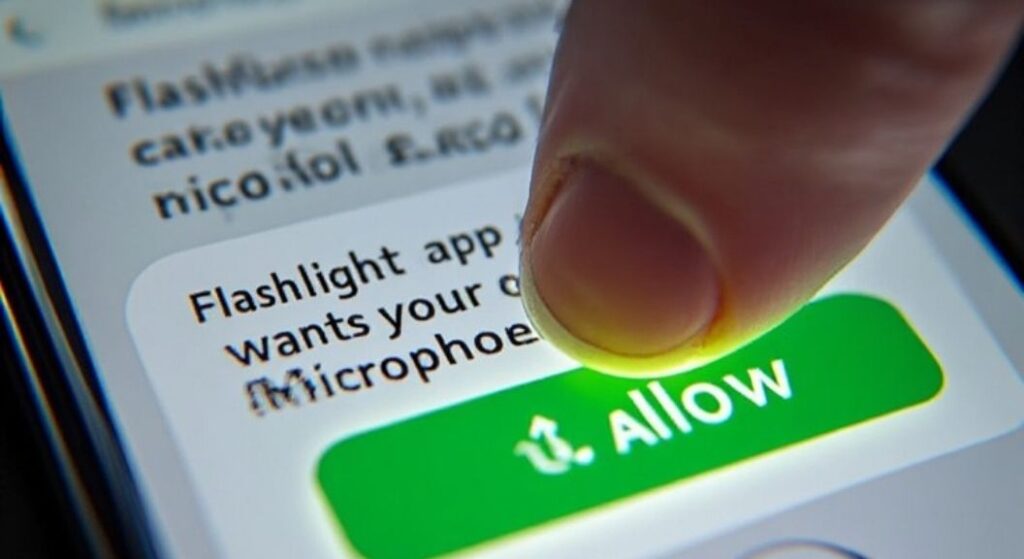
You must stop granting broad permissions to random applications. Many people blindly click “allow” when installing a new game or utility app. This careless habit instantly compromises your smartphone microphone’s privacy. You give away your rights without reading the terms and conditions.
Take control of your data immediately. You need to check app permissions regularly. A simple flashlight app has absolutely no reason to access your microphone or camera. Revoking these unnecessary permissions forms your first line of defense against potential digital eavesdropping. Stop giving companies free access to your life.

How to Check Which Apps Use Your Microphone in 30 Seconds
You can secure your device with just a few taps. Open your phone’s main settings menu and navigate to the privacy section. Look for the microphone permission manager. This screen displays a comprehensive list of all applications currently accessing your device’s audio recording capabilities.
Review this list carefully and disable microphone access for anything suspicious. Only grant access to essential apps, such as your phone dialer or video-calling software. You must actively review privacy settings every few months. This quick maintenance routine significantly reduces your risk of unauthorized background audio recording.
Data Shows: 5 Types of Data That Make Phones Constantly Listening Seem True
Tech giants collect massive amounts of silent data daily. They log your GPS coordinates, tracking you as you travel miles (kilometers) across town. They analyze your search queries, purchase history, and even the time you spend hovering over an image. This metadata paints a perfect picture of your life.
This predictive power feels like magic, but it relies purely on statistics. A recent report published in PubMed and supported by Eurostat data shows that behavioral tracking accurately predicts consumer spending. They know what you will buy before you even speak the words aloud.
Fact Box: The True Cost of Data Collection
| Data Point Analyzed | How It Predicts Your Behavior | Privacy Risk Level |
| Location Proximity | Links your profile to friends nearby. | High |
| Purchase History | Suggests related items (e.g., buying a tent triggers sleeping bag ads). | Medium |
| Hover Time | Measures your hidden interest in a product image. | High |
| Search Queries | Directly feeds keyword data to advertisers. | Severe |

Start Using These Privacy Settings to Silence Background Listening
You hold the power to restrict this invasive data collection. Dive into your smartphone settings and look for the advertising preferences. You must actively choose to limit ad tracking across all your digital accounts. This single action drastically reduces the accuracy of the targeted ads you see daily.
Disable location tracking for apps that do not absolutely require it. Your weather app needs your city, but your calculator does not. You should also turn off background app refresh for social media platforms. These proactive steps prevent companies from quietly building a behavioral profile while your phone sleeps.
How to Turn Off ‘Hey Siri’ and ‘Hey Google’ Without Breaking Your Phone
Smart assistants wait silently for their specific wake words. This feature requires the microphone to remain active on a hardware level. If you fear voice assistant eavesdropping, you can easily disable this constant vigilance. You just need to turn off voice assistant wake word detection in your settings.
Your phone will still function perfectly without this feature. You can simply hold down the power button to summon your assistant manually. Does Siri listen all the time? Only locally for the wake word. By disabling it, you ensure the microphone stays physically powered down until you press a button.

Is ‘Phones Are Constantly Listening’ Technically Possible in 2026?
Recording and uploading millions of conversations requires impossible logistics. Server farms running at an optimal 68°F (20°C) would overheat from the processing load. According to the Cybersecurity and Infrastructure Security Agency (CISA.gov) in the US, mass audio surveillance is highly inefficient for targeted advertising. The bandwidth costs would bankrupt any tech company rapidly.
Instead, companies use cheaper, highly efficient metadata. Text-based data points take up microscopic amounts of storage space. Analyzing your silent digital behavior provides better advertising returns than transcribing messy, ambient audio. Your phone does not need to listen because it already knows everything you type, tap, and search.
Unlock the Truth Behind Predictive Ads Without Microphone Access
You probably wonder, how does targeted advertising work without audio? It relies heavily on a concept called look-alike audiences. Algorithms group you with thousands of other users who share your exact demographics and interests. If people in your group suddenly buy blenders, the algorithm assumes you want one too.
This predictive modeling borders on telepathy. If you pause on a video about dog food, the system flags your interest instantly. Later, when you finally mention getting a dog to your spouse, the ad appears. You assume the phone listened, but the algorithm actually predicted your shifting life circumstances perfectly.

10 Psychological Tricks That Explain the Phones Are Constantly Listening Myth
Our human brains naturally search for patterns in chaos. We constantly try to connect unrelated events to make sense of our world. When an ad matches a recent conversation, we instantly draw a direct, paranoid conclusion. We completely ignore the thousands of irrelevant ads we scroll past every single day.
Confirmation Bias and the Phones Are Constantly Listening Effect
This mental shortcut is known as confirmation bias technology. When you wonder, “Is my phone listening to conversations?“, your brain looks for evidence to prove it. You notice the one highly relevant ad and forget the rest. This psychological illusion makes the myth feel like an undeniable reality.
How to Reset Your Advertising ID to Break the Ad Tracking Loop
You can easily disrupt these powerful predictive algorithms today. Every smartphone contains a unique identifier used exclusively for marketing purposes. When you reset the advertising ID, you effectively wipe your marketing slate clean. The advertisers lose their carefully constructed profile of your long-term digital habits and daily routines.
Navigate to your device’s privacy settings to find this reset option. Performing this reset every few months keeps data brokers guessing. You will still see advertisements, but they will become highly generic and irrelevant. This simple trick quickly stops the eerie feeling that your device knows your deepest secrets.

Master Cross-Device Tracking and End the Phones Are Constantly Listening Fear
Advertisers rarely rely on a single device to monitor you. They use sophisticated cross-device tracking to follow you everywhere. When you browse for a watch on your laptop, the ad follows you to your mobile phone. This seamless transition makes it feel like your devices secretly communicate via audio.
You can stop this intrusive practice by logging out of shared accounts. Avoid using your primary email address to sign into random websites. Use privacy-focused browsers that block third-party tracking cookies automatically. By breaking the chain between your devices, you regain your privacy and stop your phone from listening to your fears.
Start Building a Privacy-First Smart Home That Doesn’t Eavesdrop
You have the power to create a secure digital environment. Take an hour this weekend to review all your smart home permissions. Mute the microphones on your smart speakers when they are not in use. A few simple adjustments protect your family from intrusive profiling and unwanted corporate surveillance.
The feeling of being watched is stressful, but knowledge brings peace. Your devices rely on your predictable habits, not a hidden microphone. Take control of your data today and reclaim your digital independence. You can finally rest easy knowing exactly how these complex advertising algorithms actually function behind the scenes.
Fact-Minded Verdict: False – Tech companies do not record your audio 24/7 for ads; they use highly advanced metadata profiling and predictive algorithms to guess your behavior instead.

FAQs:
1. Why do I get ads for things I only talked about?
Your phone relies on predictive algorithms, cross-device tracking, and location proximity to guess your behavior. If a friend searches for a product near you, the system assumes you share that interest and serves you the same ad.
2. Is my phone constantly recording my everyday conversations?
No, tech companies do not actively record your daily chats because processing massive audio files is incredibly inefficient and costly. They rely on text-based metadata, search queries, and silent behavioral tracking to build an accurate profile instead.
3. Do voice assistants like Siri and Google Assistant listen all the time?
They listen passively only for specific “wake words” and process this audio locally on your device’s hardware. You can easily disable this background vigilance in your settings if you want to ensure the microphone remains completely powered down.
4. How can I stop my phone from listening to me?
You can instantly protect your privacy by going into your device settings and completely disabling microphone access for unnecessary third-party applications. Additionally, turning off smart assistant wake-word detection prevents your device from passively waiting for audio commands.
5. How does targeted advertising work without microphone access?
Advertisers use sophisticated look-alike audiences, matching your digital footprints with millions of other users who share your exact demographics. By analyzing your shared connections and online habits, they can accurately predict your next purchase before you even speak about it.