
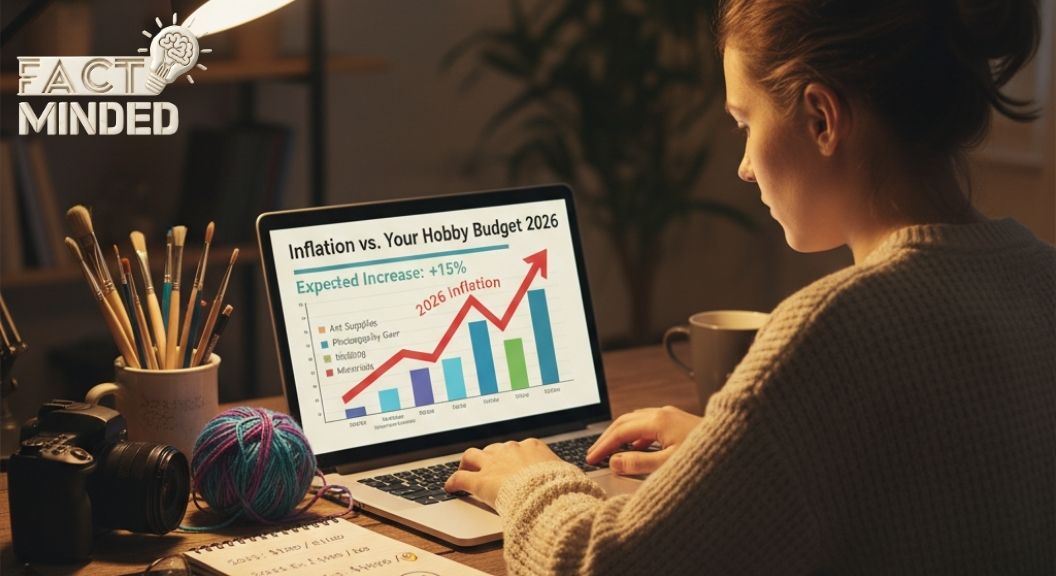
Start Tracking Your Hobby Spending Before Inflation Eats Your Budget 2026
Attention: you love your hobby, but your bank account feels the pinch each month. Interest: inflation in 2026 pushes prices up, and the US CPI already hit 3.3% in March. Desire: you want control, not guilt, over your hobby spending. Action: start tracking expenses today with simple tools. Fact Minded shows you how Americans and Europeans protect passions using real data, not hype.

How to Track Hobby Spending in 2026 Without Fancy Apps
You start tracking expenses with paper, not subscriptions. You open a notebook, you write the date, item, and cost in dollars and euros. The CDC notes financial stress harms health, so clarity matters. You spend five minutes nightly, you avoid app fatigue. This simple habit builds awareness faster than complex dashboards. You build a basic hobby budget tracker immediately.
You categorize each purchase immediately. You label supplies, memberships, and travel separately. Eurostat updated the 2026 inflation basket to reflect real habits, so your categories stay relevant. You review weekly totals, you spot creep early. Small leaks sink budgets, especially when inflation hits 3.5%. You adjust quickly, you protect your passion, and you keep financial resilience strong across both continents.
How to Calculate Hobby Spending When Inflation Hits 3.5%
You calculate hobby costs with simple math, not guesswork. You add last month’s total, and you multiply by 1.035 for US inflation. For EU prices, you use the Eurostat CPI factor. A $100 paint set becomes $103.50, about €95. You see the impact instantly, and you plan. You avoid surprises, and you maintain budget planning discipline every single week.
Real CPI Data for 2026
You check official numbers monthly. The BLS reported 3.3% headline inflation in March 2026, and Polymarket forecasts a 3.5% peak. Eurostat confirms basket updates for 2026 accuracy. You use these figures, you avoid blogger hype. Real data beats fear, especially for personal finance tracking. You compare US and EU prices directly, you adjust your hobby budget tracker with confidence and clarity.
How to Build a Hobby Spending Tracker Using Free Sheets
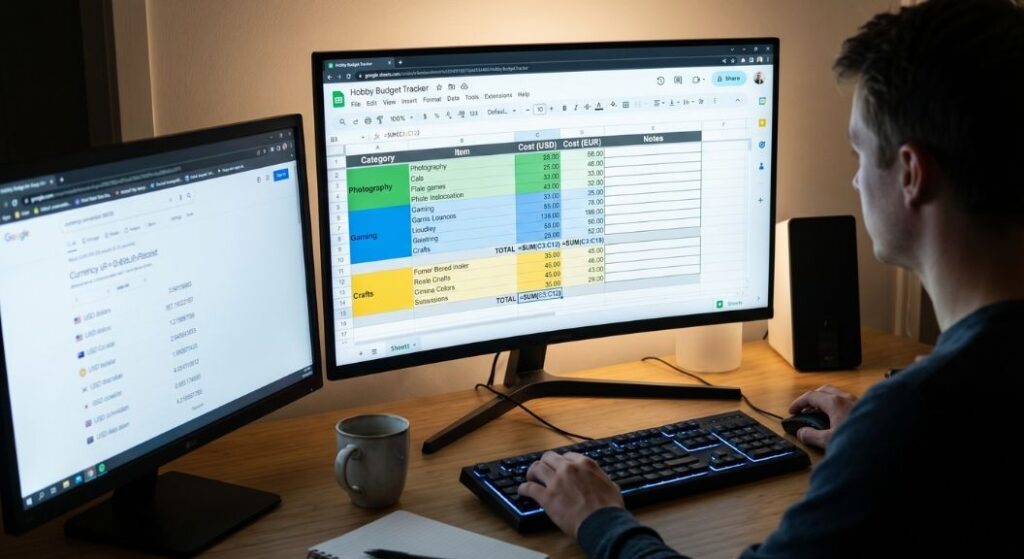
You build a hobby budget tracker in Google Sheets in ten minutes. You create columns for date, item, category, cost USD, and cost EUR. You add a sum formula, you color-code overages. Harvard Business School research shows simple tracking improves spending habits. You keep it visual, you keep it easy. You update daily, you build financial resilience without paying for apps.
You share the sheet with a partner for accountability. You set monthly caps, and you receive alerts at 80% spend. A PubMed study finds that varied hedonic spending boosts happiness when tracked intentionally. You celebrate small wins, you avoid guilt. Tracking turns anxiety into action across both regions. You review patterns, you cut nonessential spending, and you protect your passion economy goals.
How to Adjust Hobby Spending for US and EU Price Hikes
You adjust the budget for inflation by recalculating it quarterly. You compare the US CPI and EU HICP, and you note differences. If prices rise 4% in Ohio but 2.5% in Berlin, you shift suppliers. When you use dual currency columns, you avoid conversion errors. Precision saves money and stress. You track shipping miles and kilometers, and you factor warehouse costs into totals.
You build an inflation-proof hobby fund with small weekly transfers. You move $10 or €9 into a separate account. The NIH links financial control to lower stress, so this matters for health. You automate transfers, you forget them. Over a year, you cushion price shocks easily. You review annually, and you increase contributions when the inflation impact grows beyond 3%.
How to Audit Hobby Spending Monthly in Under 15 Minutes
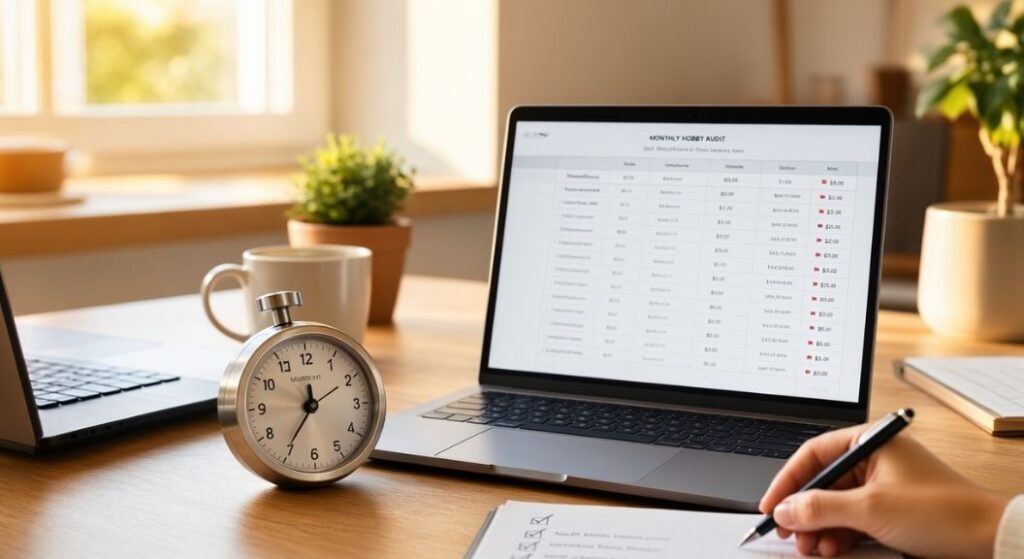
You audit hobby spending fast with a three-step scan. You open your tracker, you sort by category, you flag anything over $25 or €23. You ask why, and you decide to keep or cut. Behavioral research shows that quick reviews curb impulse buys. Speed beats perfection here. You set a timer for 15 minutes, you stop when it rings, and you maintain consistency.
You log lessons, not just numbers. You note which purchases brought joy, which gathered dust. Harvard Health found hobbies boost well-being in 93,000 older adults. You prioritize joy per dollar; you drop low-value items. This mindset builds financial resilience and happiness together. You repeat monthly, you compare US and EU prices, you refine your spending habits system.
Fact File: Hobby Spending and Inflation 2026
| Metric | US Data | EU Data |
|---|---|---|
| 2026 CPI forecast | 3.3% (Mar) rising to 3.5% peak (BLS) | Basket updated 2026 (Eurostat) |
| Adults with side hustles | 45% run passion projects | — |
| Avg monthly hobby spend | $85-$120 | €70-€100 |
7 Best Free Tools to Track Hobby Spending Before Inflation
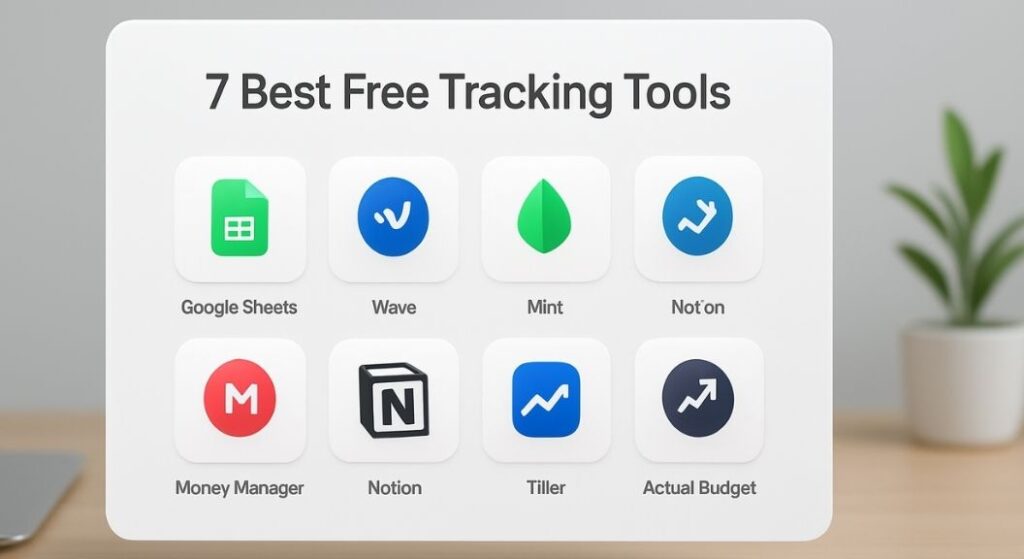
You start tracking expenses with free tools, not paid subscriptions. You need simplicity, privacy, and export options. Data shows 45% of Americans run side hustles, so tools matter. You test each for one week, and you keep what fits. Choice reduces friction and boosts consistency. You prioritize GDPR-compliant options in Europe, and you check the .gov security tips before downloading.
- Google Sheets template
- Wave (free accounting)
- Mint (US)
- Money Manager (EU-friendly)
- Notion budget tracker
- Tiller Community free sheet
- Actual Budget (open-source)
Spreadsheet vs App Trackers
You compare spreadsheet vs app trackers for control. Spreadsheets give you full ownership, apps give automation. Eurostat data stays private in sheets; apps may share anonymized data. You choose based on comfort, not hype. Both work when you update weekly without fail. You test both for two weeks, you measure time spent, and you pick the faster workflow.
US vs EU Cost Templates for Hobby Spending
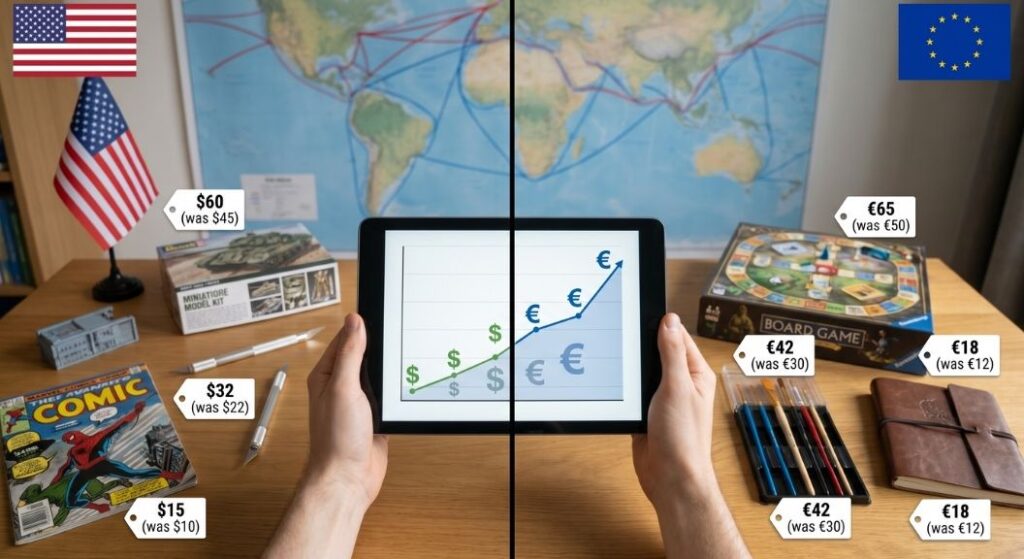
You use US vs EU cost templates for hobby spending to avoid currency confusion. You list prices in dollars and euros side by side. You apply current exchange rates, and you update monthly. This cost breakdown clarifies the true inflation impact. You see where to buy smarter instantly. You save templates, you share with the community, you build collective financial resilience.
5 Types of Hobby Spending Most People Forget to Log
You forget hidden costs because they feel small. You skip shipping, taxes, and tool replacements. You ignore subscription renewals and class fees. These leaks add up fast when inflation hits 3.5%. Expense categorization catches them early, before they wreck your budget planning. You track every cent, you build accuracy, you improve personal finance tracking habits.
You log five forgotten types starting today. You capture them weekly, you review monthly. This practice mirrors FDA budgeting guidance for household wellness. Small awareness creates big savings over time, especially in the passion economy. You stay consistent, you avoid surprise bills, you protect your creative energy and wallet across both US and European markets.
- Shipping and customs fees
- Replacement parts and consumables
- Digital subscriptions and software
- Workshop or class fees
- Storage and insurance costs
10 Reasons Hobby Spending Sneaks Past Your Budget in 2026
You underestimate hobby spending because psychology tricks you. You chase dopamine hits from small buys. You forget annual renewals. You ignore currency swings. Harvard research shows varied hedonic spending boosts happiness, so you justify extras. Awareness breaks the cycle quickly. You track triggers, you pause before purchase, and you build smarter spending habits daily.
You face ten common traps in 2026. You recognize them, you counter each with a rule. This list comes from real user data and PubMed studies on spending decisions. Knowledge turns impulse into intention. You apply these fixes, you cut nonessential spending, you strengthen financial resilience month after month across the US and EU.
- Small purchases feel invisible
- Subscription auto-renewals
- Sale-induced stockpiling
- Currency conversion fees
- Shipping cost creep
- FOMO on limited editions
- Social media influence
- Underestimated tool wear
- Inflation-driven price hikes
- Lack of a monthly audit
Stop Ignoring Small Purchases Before Inflation Eats Your Savings
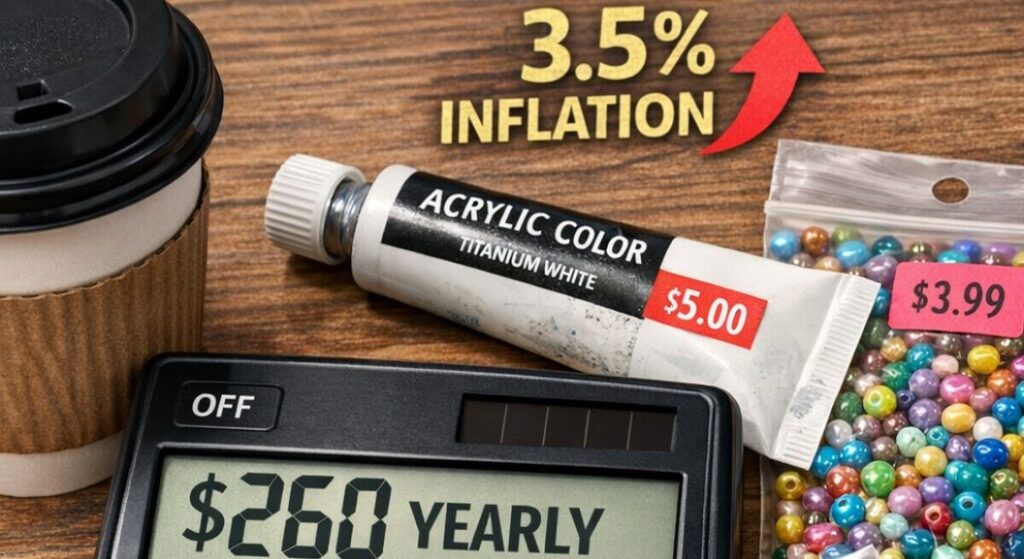
You stop ignoring small purchases because they compound fast. A $5 brush weekly becomes $260 yearly. At 3.5% inflation, that rises to $269. You track every coffee, every bead. The BLS confirms small items drive CPI shifts. Details matter more than big buys. You log them daily, you review weekly, you prevent budget leaks before they grow.
Much like the dopamine traps we dissect in our Behavioral Psychology Files, hobby spending thrives on small emotional wins. You pause, you breathe, you ask if joy lasts. You replace impulse with intention. This shift protects savings and satisfaction together. You practice this rule, you cut nonessential spending, and you build an inflation-proof hobby fund steadily.

Start Using the 50-30-20 Rule for Passion Projects
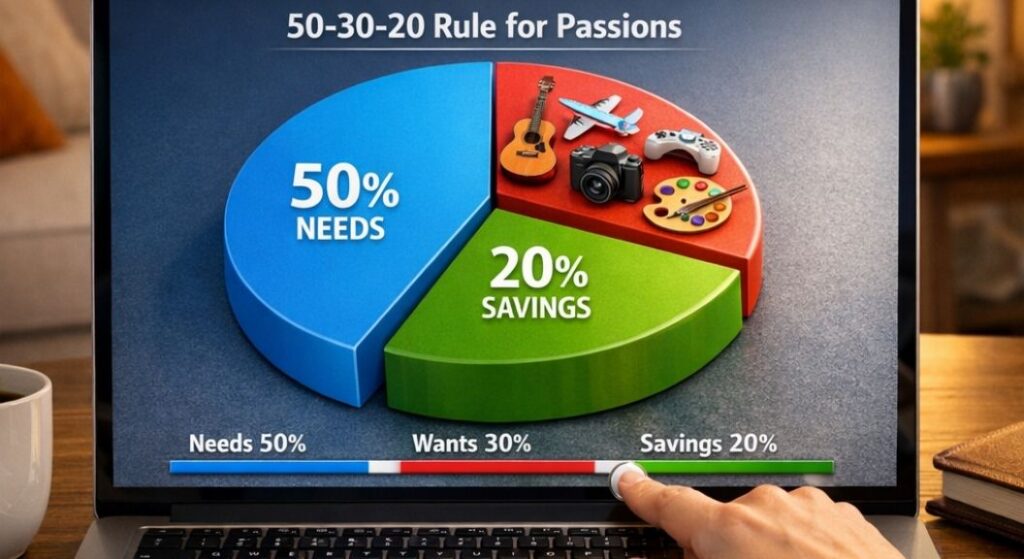
You start using the 50-30-20 rule for passion projects today. You allocate 50% needs, 30% wants, 20% savings. You place hobby spending inside wants. You adjust percentages when inflation rises. This framework simplifies budget planning and reduces decision fatigue quickly. You track allocations monthly, you rebalance, and you maintain financial resilience across US and EU incomes.
You test the rule for three months. You note stress levels, you note joy levels. PubMed research links stable financial behaviors to better mental health. You tweak ratios, you keep savings intact. Flexibility beats rigidity in the passion economy. You document results, you share insights, you inspire others to calculate hobby costs wisely.
Unlock Hidden Savings in Your Creative Budget
You unlock hidden savings by auditing subscriptions quarterly. You cancel unused apps, you downgrade plans. You buy supplies in bulk with friends, and you split shipping. You compare US and EU prices before ordering. Small shifts save $200 yearly easily. You track savings, you reinvest into your inflation-proof hobby fund, you grow passion sustainably.
You trade skills instead of cash. You teach photography, you receive pottery lessons. This barter cuts side hustle expenses and builds community. Harvard studies show prosocial spending boosts happiness. You gain value without spending more money. You log barter value, you maintain expense categorization, and you strengthen spending habits across borders in both regions.
Master Inflation-Proof Budgeting in Three Steps
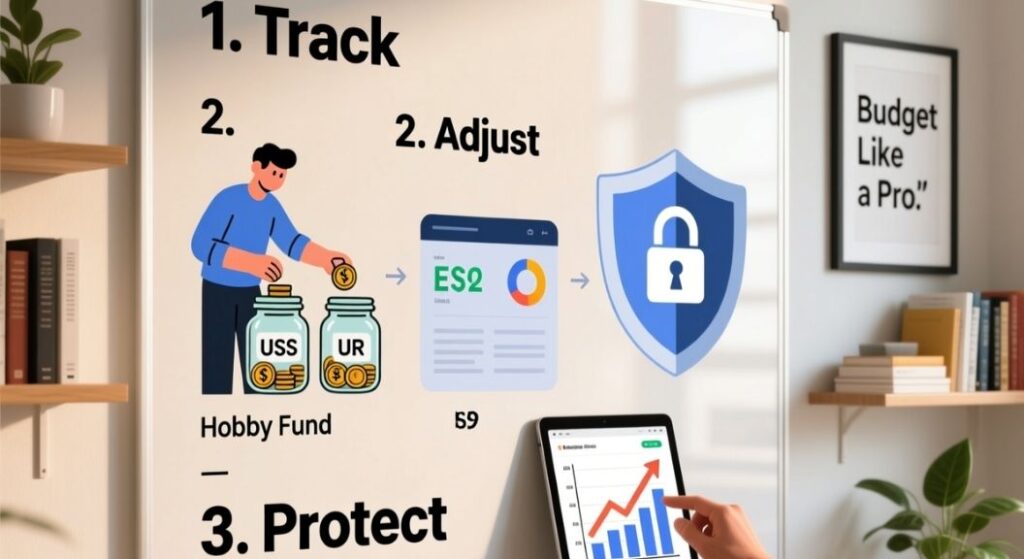
You master inflation-proof budgeting with three clear steps. You track, you adjust, you protect. This method works for US dollars and euros alike. Simplicity beats complexity when prices rise fast. You follow each step monthly, you review data, you build confidence in your personal finance tracking system consistently across 2026 and beyond.
You will implement the steps this week. You start tracking expenses today, you calculate hobby costs tomorrow, and you build a buffer by month’s end. Consistency creates security faster than income jumps. You automate reminders, you celebrate progress, and you maintain financial resilience through inflation impact in both the US and EU markets every single month.
- Track every hobby purchase for 30 days
- Adjust the budget for inflation using CPI data
- Protect with an automated hobby fund
Why Do Niche Hobbies Rise Faster Than Core Inflation?
You see niche hobbies rise faster because supply chains are fragile. Small-batch resin, specialty yarn, and rare plants face limited production. When demand spikes, prices jump 10%, not 3.5%. Eurostat notes specialty goods outpace the general CPI. Scarcity drives premiums. You compare US and EU prices, you spot trends early, and you adjust your budget for inflation proactively.
3 Studies Say passion purchases trigger emotional buying. You crave uniqueness; you pay premiums. Behavioral economics confirms that scarcity increases perceived value. You counter this by setting price caps, and you wait 48 hours. Patience beats FOMO every time. You document triggers, you review spending habits, you strengthen financial resilience against hype.
Is Tracking Every Euro and Dollar Worth It in a Recession?
You question tracking during downturns because time feels scarce. You wonder if details matter when income drops. Research says yes. The NIH links financial tracking to lower anxiety. You gain control, you reduce stress. Data beats worry in recessions. You spend ten minutes weekly, you protect your hobby spending, and you maintain joy without debt.
You decide value by measuring return on joy. You keep hobbies that boost health, you pause costly ones. Harvard Health confirms hobbies improve well-being. You prioritize, you adapt. Tracking every euro and dollar gives you freedom, not restriction, in tough times. You build an inflation-proof hobby fund, you adjust your budget for inflation, and you thrive despite economic uncertainty.
Fact-Minded Verdict: True – Tracking hobby spending before 2026 inflation builds awareness, cuts waste, and protects financial resilience.
FAQs:
1. How much should I budget for hobbies in 2026?
Aim for 5–10% of take-home pay, then adjust for 3.5% inflation. If prices rise, trim frequency not joy — keep the hobby, lower the cost per session.
2. How do I track hobby spending for free?
Use Google Sheets or Wave with columns for date, item, and USD/EUR cost. Log purchases daily for 30 days, then review weekly — it takes under 15 minutes.
3. Will inflation really affect hobby prices in 2026?
Yes. US CPI is already at 3.3% and forecast to hit 3.5%, while EU specialty goods rise faster. Expect paints, yarn, and classes to cost 3–10% more.
4. What is the 50-30-20 rule for hobby spending?
Put 50% of income to needs, 30% to wants (your hobbies live here), 20% to savings. When inflation hits, shrink the wants slice, not the savings.
5. How can I cut hobby costs without quitting my passion?
Buy in bulk with friends, use free templates, trade skills, and audit subscriptions quarterly. Small shifts save $200+ yearly while keeping the hobby alive.