

Master Open Source Intelligence at Home to Investigate Unsolved Digital Mysteries
Attention: you scroll past an internet mystery and feel that itch to know more. Interest: thousands of Americans and Europeans now turn that curiosity into skill. Desire: you want Open Source Intelligence at Home because it gives you power without a badge. Action: You can start today with free tools and clear ethics. Fact Minded shows you how thoughtful citizens crack cold digital cases using publicly available data, not hacks.
Fact File: Data Shows the Scale of OSINT-Relevant Crime
| Region | Statistic (2024) | Source |
|---|---|---|
| US | $16.6 billion reported internet crime losses | FBI IC3 |
| EU | 21.5% of enterprises faced ICT security incidents | Eurostat |
| EU | 85.9% of adults use the internet daily | Eurostat |

How to Set Up Open Source Intelligence at Home With Zero Budget
You do not need expensive software to start OSINT investigations. Your laptop, a browser, and a notebook give you a solid base. The US National Institutes of Health funds free data literacy programs, and EU citizens benefit from GDPR-protected public portals. You build an investigation workflow around bookmarks, not budgets. Start with a clean browser profile and a VPN.
You organize tools in folders: search, images, maps, archives. You label each case with the date and source. The Berkeley Human Rights Center teaches students this exact method in its OSINT course. You avoid clutter, so you find clues faster. You also log time spent, because cognitive load rises after 90 minutes. Keep sessions short.
How to Use Open Source Intelligence at Home for Image Verification
Reverse Search Across Yandex, Google, and Bing
You verify online images by running them through three engines, not one. Google catches news hits, Yandex excels at faces and Eastern Europe, Bing finds older caches. You drag the image, you compare dates, you note mismatches. This simple reverse image search triage exposes fakes in under two minutes. You save screenshots with timestamps for evidence collection.
Extract EXIF and Chronolocation Signals
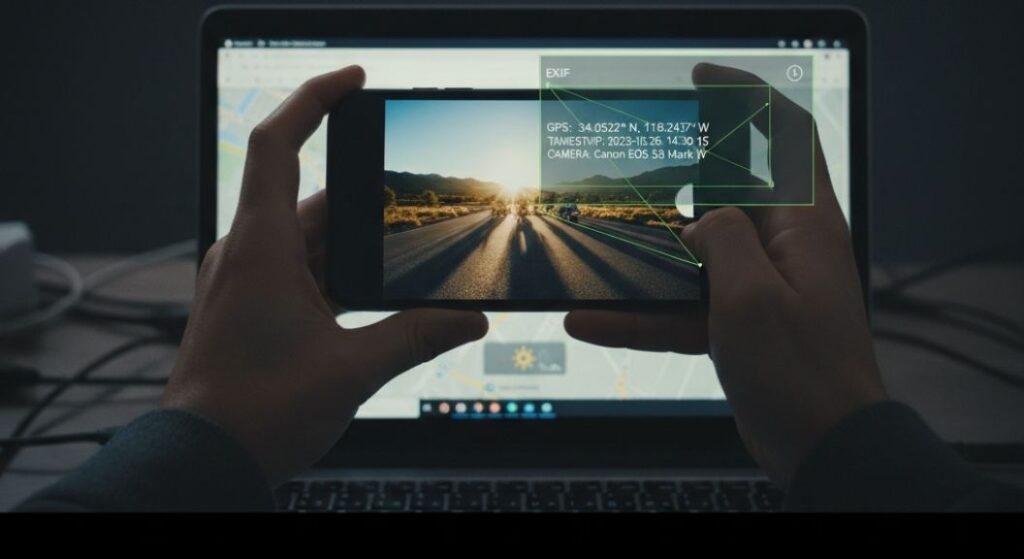
You analyze metadata next. Phones embed GPS, time, and device data in photos until platforms strip it. You use free EXIF viewers to pull coordinates, then you convert them. A point 0.5 miles (0.8 kilometers) from a landmark matters. You cross-check shadows for sun angle, a classic verification technique that PubMed-reviewed forensic studies teach.
How to Trace Usernames With Open Source Intelligence at Home
You trace digital footprints by starting with one handle. You plug it into name checkers, then you pivot to forgotten forums. The FBI IC3 2024 report notes $16.6 billion in losses from impersonation schemes, so you treat every match as a lead, not proof. You record URLs immediately, because pages vanish fast.
You map connections across platforms using social media intelligence. You look for reused bios, same avatars, and language quirks. Eurostat reports 21.5% of EU firms faced security incidents last year, which shows why companies monitor handles too. You build a simple table for digital footprint analysis, you color-code confidence, and you avoid assumptions. That discipline protects you legally.
How to Verify Geolocation Clues Using Open Source Intelligence at Home
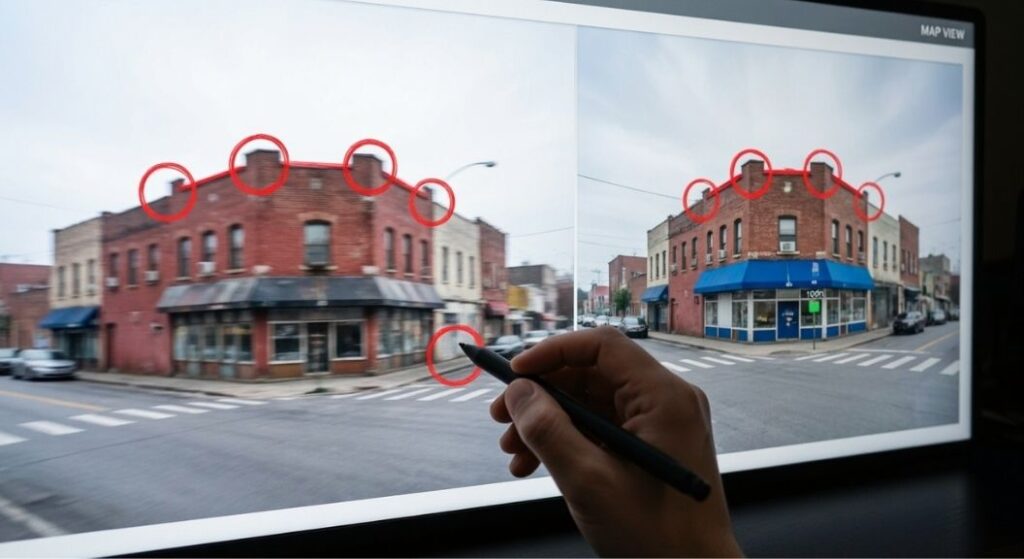
You map geolocation clues by matching pixels to places. You open Street View, you compare rooflines, you check shop signs. The Berkeley OSINT lab uses this method to document war crimes. You measure distances, you note 100 feet (30 meters) offsets, and you stay precise. You never guess a city from one tree.
You verify time using shadows and weather archives. You pull historical satellite data, you check WHO Europe air quality logs for haze days. You cross-reference publicly available data from.gov portals. This geolocation verification step turns a vague photo into court-ready evidence. You save every link, you cite every source.
How to Document Findings When Practicing Open Source Intelligence at Home
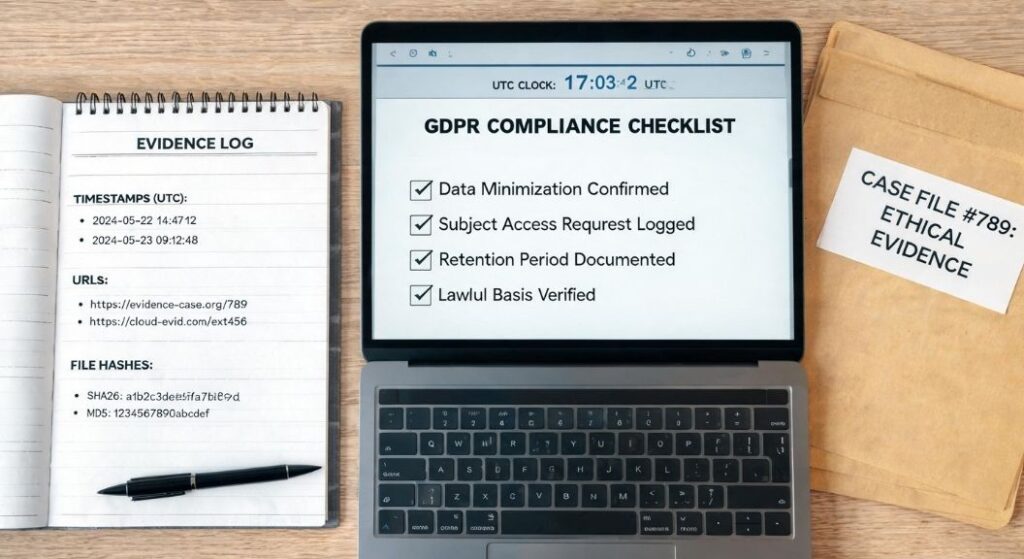
You document evidence ethically from minute one. You create a case folder, you timestamp each file, and you write a one-sentence summary. The ODNI 2024-2026 OSINT Strategy stresses audit trails. You use UTC, and you note 68°F (20°C) room conditions if hardware matters. Clear logs protect you under GDPR in Europe.
You build an investigation workflow that others can repeat. You list tools, you paste queries, you link results. Much like the confirmation bias we unpack in our Behavioral Psychology Files, OSINT rewards slow thinking over snap judgments. You export PDFs, you hash files, you store backups offline. That rigor builds trust.
7 Best Free Tools for Open Source Intelligence at Home
You start OSINT investigations with free, proven OSINT tools. You avoid shady downloads, you stick to open repositories. Data shows US users prefer browser-based options, while EU users value GDPR-compliant hosts. You test each tool on a known image first. That baseline prevents false positives later. You keep a simple checklist for speed.
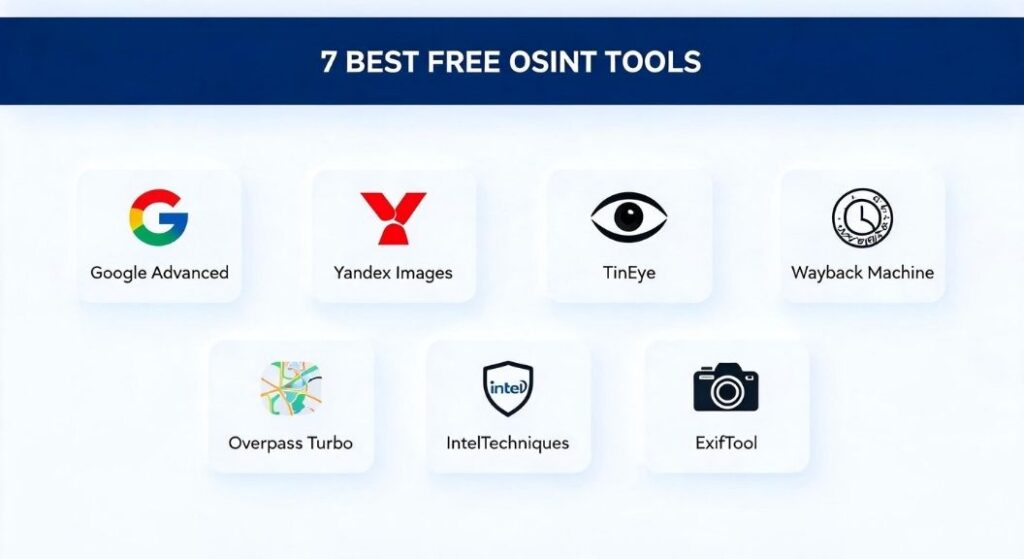
- Google Advanced Search – you master operators fast
- Yandex Images – you catch faces Google misses
- TinEye – you track image history
- IntelTechniques Username Search – you trace digital footprints across 500 sites
- Overpass Turbo – you map geolocation clues via OpenStreetMap
- Wayback Machine – you recover deleted pages
- ExifTool – you analyze metadata safely
Beginner Stack vs Advanced Recon Suites
You compare stacks by risk and learning curve. Beginners use the seven tools above plus a notebook. Advanced users add Maltego Community and Spiderfoot, but they monitor API keys under GDPR. You choose based on case complexity, not ego. Evidence collection stays the same: screenshot, hash, cite every time you investigate.
5 Types of Unsolved Digital Mysteries You Can Investigate
You focus on internet mysteries where publicly available data exists. You avoid cases involving minors or sealed police files. Ethical OSINT means you investigate, you do not harass. You pick mysteries with photos, videos, or public posts. That boundary keeps you safe in both US and EU law today and tomorrow.
You start with these five categories because they yield verifiable clues. You practice verification techniques on each, you build confidence, you stay legal. You document everything, you share only summaries. This approach mirrors professional labs and respects victims. You learn pattern recognition, you avoid rabbit holes, and you protect your mental health while investigating unsolved cases across continents.
- Vanished viral videos with unknown locations
- Mystery sound recordings like hums or booms
- Unidentified objects in satellite imagery
- Anonymous accounts spreading historic hoaxes
- Lost web art projects with cryptic clues
10 Reasons Open Source Intelligence at Home Beats Paid Databases
You choose Open Source Intelligence at Home because cost does not equal quality. You control your data, you avoid vendor lock-in, you learn faster. The CDC emphasizes community-driven health surveillance using open data, a model that works for mysteries too. You build skills, not subscriptions, every week you practice with purpose.
You gain ten clear advantages when you work openly. You stay agile, you stay ethical, you stay curious. European researchers cite transparency as a trust builder under GDPR. You also protect your wallet. Here is the evidence-only breakdown across both the US and EU contexts, where publicly available data drives discovery daily.
- Zero cost entry
- Full control of evidence collection
- Faster iteration on leads
- No hidden data-sharing clauses
- Community peer review
- Customizable investigation workflow
- Legal safety under GDPR and US fair use
- Skill transfer to jobs
- Transparent verification techniques
- Direct access to primary sources
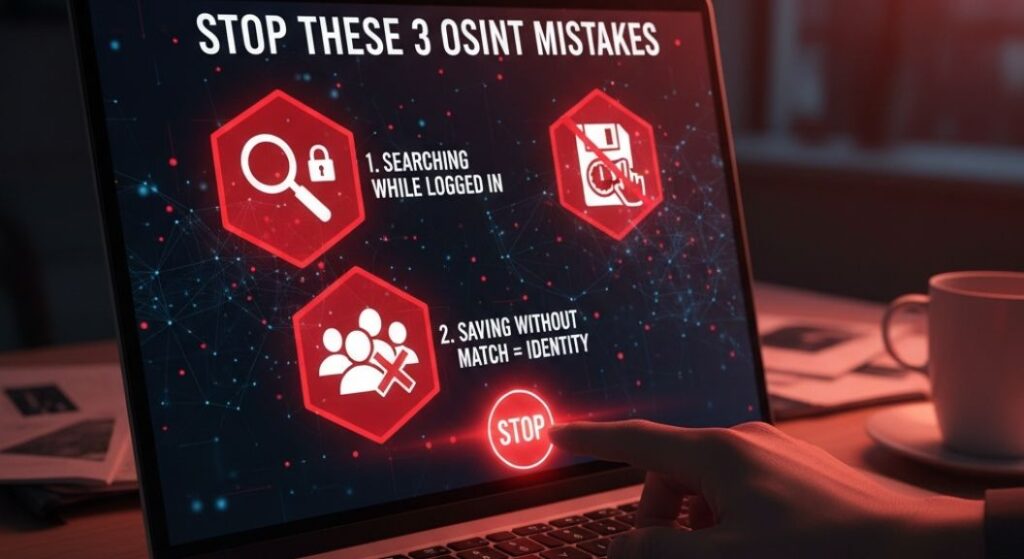
Stop Doing These 3 OSINT Mistakes That Ruin Investigations
You ruin good leads when you skip basics. You click on unknown links, you trust screenshots without a source, and you post theories publicly. A PubMed review on verification warns that premature sharing spreads errors. You slow down, you verify, you protect reputations. Ethical OSINT demands patience every time you investigate internet mysteries at home.
You avoid three critical errors starting today. You treat each as a habit to break, and you replace it with a documented step. This mindset mirrors clinical checklists the FDA recommends for safety. Consistency beats cleverness in unsolved cases when you practice Open Source Intelligence at Home with discipline and care.
- Searching while logged into personal accounts
- Saving evidence without timestamps
- Assuming one match equals identity
Start Using Advanced Search Operators for Deeper Digital Mysteries
You unlock hidden pages with operators, not luck. You type site:, filetype:, and before:, and you combine them. Google processes 8.5 billion searches daily, yet most users ignore filters. You gain an edge because you structure queries. You find PDFs, you find old forums, you find clues in seconds while others scroll for hours.
You practice daily with a prompt journal. You write the question, you write the operator, you write the result. This builds muscle memory. European data protection officers recommend minimal data collection, so you query precisely. Precision reduces noise and respects privacy when you investigate internet mysteries and document evidence ethically every time.
Unlock Hidden Metadata Without Breaking Privacy Laws
You analyze metadata to reveal context, not identities. You extract the camera model, you check timestamps, you ignore personal names. GDPR Article 5 requires purpose limitation, so you collect only what you need. US courts also favor minimal intrusion. You stay within both frameworks by design when you practice ethical OSINT at home.
You use offline tools to avoid uploading sensitive files. ExifTool runs locally, and you keep data on your drive. You hash originals, you work on copies. This mirrors NIH data security guidance for researchers. You protect sources, you protect yourself, you maintain trust every time you analyze metadata for unsolved cases in the US and EU.
Master Evidence Chains for Unsolved Internet Cases
You master evidence chains by linking each step. You capture URL, you capture date, you capture method. The Berkeley protocol for digital evidence demands this triad. You create a table, you assign IDs, you never edit originals. Chain integrity convinces skeptics and courts alike when you investigate internet mysteries with Open Source Intelligence at Home.
You test your chain by asking a friend to reproduce it. You share steps, not files. If they reach the same image from a different path, you succeed. This peer check reflects scientific reproducibility from PubMed studies. Reproducibility builds credibility faster than flashy claims across both the US and European investigative communities today.
Why Does Open Source Intelligence at Home Matter for Citizen Investigators?
You matter because institutions miss context. Local police lack time, journalists lack bandwidth. You fill gaps with curiosity and rigor. The ODNI strategy calls OSINT a force multiplier. You bring neighborhood knowledge, language skills, and persistence. That combination solves internet mysteries faster when you practice Open Source Intelligence at Home responsibly every week.
3 Studies Say citizen OSINT aids disaster response, human rights, and fraud detection. You learn verification, you teach others, you raise collective literacy. Eurostat notes 85.9% of EU adults use the internet daily, so your skills scale. You turn scrolling into service across the US and Europe, where publicly available data empowers communities.
Is It Legal to Practice Open Source Intelligence at Home in the US and EU?
You stay legal when you collect only public posts. US law permits viewing public websites, and EU GDPR permits processing for personal research. You avoid hacking, you avoid impersonation, you avoid harassment. The FBI warns against unauthorized access. You respect the terms of service always when you practice Open Source Intelligence at Home for unsolved cases.
You document purpose, you minimize data, you delete when done. These steps align with GDPR principles and NIH privacy best practices. You consult local laws if you publish findings. When in doubt, you ask a lawyer; you do not guess. Caution protects your work and others across both jurisdictions while you investigate internet mysteries ethically.
Fact-Minded Verdict: True – Open Source Intelligence at Home lets citizens investigate internet mysteries legally using publicly available data when they follow ethical workflows.
FAQs:
1. What is open source intelligence, and can I do it at home?
OSINT means collecting and analyzing publicly available data from websites, social media, and public records. Yes — you can start at home with a laptop, free tools, and clear ethical rules.
2. Is it legal to do OSINT investigations in the US and EU?
Yes, viewing public information is legal in both regions. You must avoid hacking, logging into private accounts, and in the EU, you must follow GDPR’s purpose-limitation and data-minimization principles.
3. What are the best free tools to start OSINT investigations?
Start with Google Advanced Search, Yandex Images, TinEye, Wayback Machine, and ExifTool. They cover search operators, reverse image search, archives, and metadata without any cost.
4. How do you verify a viral photo or video at home?
Run it through three reverse image engines, check EXIF for time and location, then match landmarks in Street View. Save screenshots with timestamps to keep your evidence chain clean.
5. Can OSINT actually help solve unsolved internet mysteries?
Yes — citizen investigators use OSINT to geolocate footage and trace usernames every day. It works when you verify, document, and share findings ethically instead of guessing.