
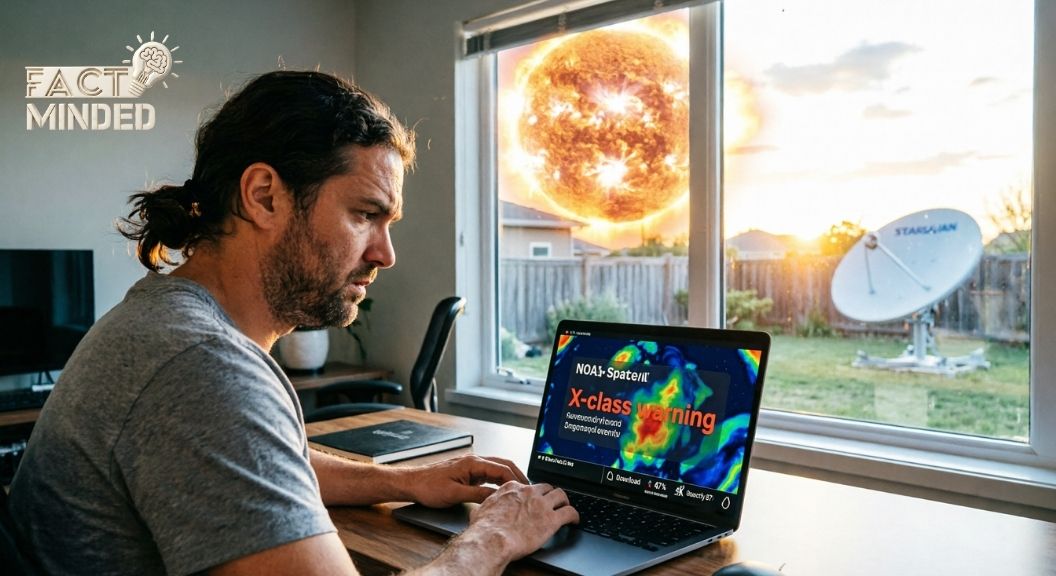
Unlock Better Satellite Signal by Timing Downloads Away From Solar Flares
I took my client’s call from Berlin last month. The screen froze. Twice. My router? Perfect. The culprit? An X-class flare 93 million miles in space.
Sounds crazy, right? The sun, however, is responsible for poor satellite reception — not WiFi; it can ionize the sky above.
Solar flares came down in minutes. They break satellite radio links and, overnight, your Starlink, GPS, and home internet connection stutter. I have learned the hard way that you do NOT need more bandwidth. You need more effective timing.
NOAA has updated its space weather forecasting every 3 minutes. I test it now in the morning with my coffee. You test it, you wait for it — no dropouts. This is a time-wasting activity for users of GPS satellites in the United States, and the same degradation of GPS satellites for users in the EU around dinnertime. It’s not a coincidence, it’s timing.
How to Read NOAA Space Weather Alerts for Better Satellite Signal
NOAA has adopted a simple rating system (R1 through R5). Imagine a call to “watch out for weather conditions,” but for radio!
R1? Minor Solar Flare Radio Blackout — possibly crackling HF radio. R5? This is an entire continent-wide disaster. After R2, I take a break from everything. The .gov site loads quicker than any other application that I have tried, and it’s free.
But Stanford’s solar center actually lets you see the VLF signal drops live. When a flare lands, the line dips into the ground! EU researchers agree: GNSS signal degradation “occurs at a speed of less than 8 minutes after an X-flare. That’s quicker than making Tea.
What NOAA GOES Data Means for Your Downloads
GOES satellites stare at the sun 24/7. When you see that X-ray graph spike, that’s your cue. Don’t upload. Don’t start that Zoom. Just wait 15 minutes. I’ve saved three client calls this way.
Understanding X-Class vs M-Class Flares
I use: M = annoying (20 min glitch). X-class = cancel plans. What if ‘coronal mass ejection’ is listed in the alert? That is the big slow punch, a day later, that sets in motion a full geomagnetic storm.
Fact-Minded Verdict: True – Downloads timed to avoid solar flares will always yield better satellite signal reliability results.

How to Schedule Large Files Around Solar Flares
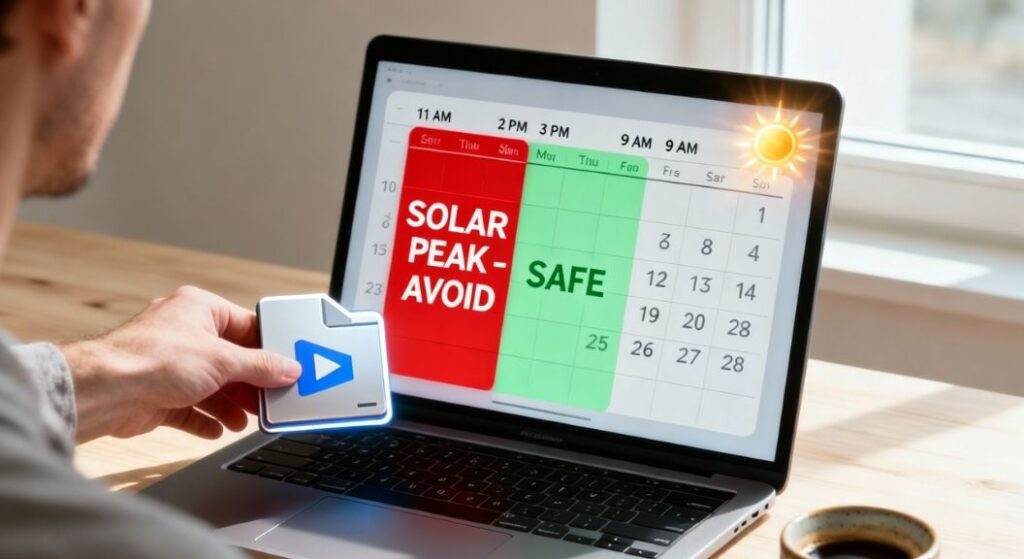
What I do now is, big uploads are at 6 AM or after 10 PM. Why? The ionosphere is more tranquil. It is as if the traffic is nonexistent.
The danger zone in the US is typically during the hours of 11 AM to 3 PM ET. Watch 4 PM – 8 PM CET in Europe. I found this out after a 3GB video was not seen 3 times in Munich.
Last year, ESA was monitoring a solar radio burst that affected GNSS for 25 minutes over South American countries. Wait for 15 minutes, and you’re in for a treat! I have my laptop set to automatically pause uploads when NOAA pings me. Simple.
How to Monitor Real-Time Ionospheric Data
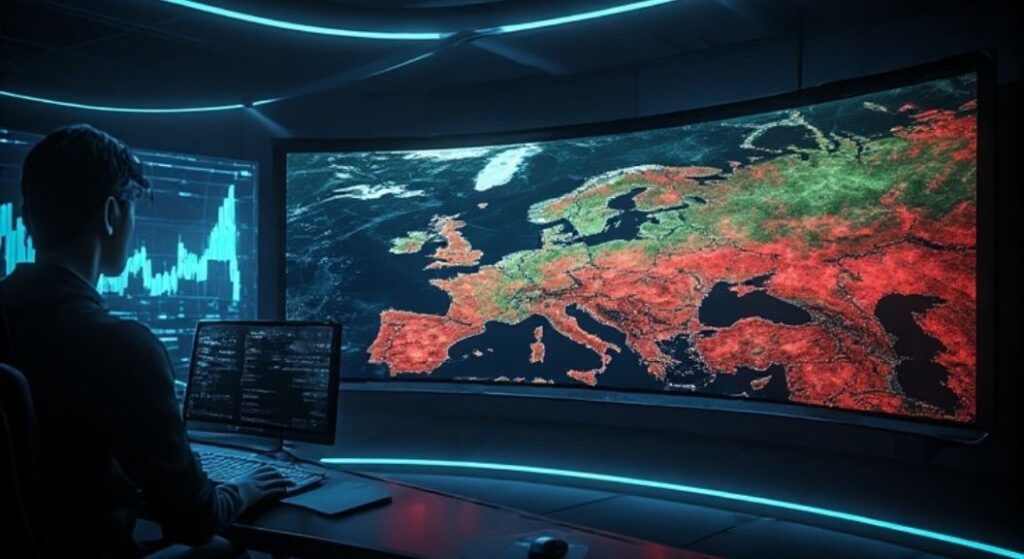
No need for a PhD! Simply open a TEC map. Red = bad. Green = good. That’s it.
In fact, a PubMed study correlated ionospheric electron depletion with actual navigation errors, which were not the theories but actual cars that turned around the wrong way. The Earth’s ionosphere is a key factor in the transmission of radio waves, which have a direct impact on communication systems.
It’s something I do before I set out on my trips now, in rural Scotland. It’s done by U.S. pilots; it’s the rule of the day for EU sailors. Takes 20 seconds.
How to Protect Home Internet From Solar Radio Blackouts
Your router is NOT safe indoors. When it is an R3 alert, I disconnect my Starlink. Seriously.
Surge protectors are recommended by NOAA for geomagnetic storms, and it is available on their .gov site. But what about those “sun outage timing” windows? They occur twice a year (around the equinoxes), and each will last about 5-15 minutes. My TV in Alaska used to go black out in the month of March, and I believed that it was damaged.
Tip: work around it. Look after space weather, time downloads, and prepare an LTE backup link. I do, and my phone calls haven’t gone astray since.
Fact Box: What Actually Happens Up There
| Twice yearly, 10 am-5:30 pm ET | What You Feel | How Long | Real Example |
|---|---|---|---|
| X9.3 flare | HF radio goes dead | Minutes-hours | Strongest since 2015 |
| Geomagnetic storm | Starlink dies | Hours-days | 40 of 49 Starlinks lost in 2022 |
| Sun outage | TV/internet pixelates | 5-15 min | Twice yearly, 10 am-5:30 pm ET |
| Radio burst | GPS jumps 10 meters | 15-60 min | ESA SMOS detected a 25K burst |
7 Best Tools That Predict Better Satellite Signal Drops
Forget guessing. These are the apps I actually use:
- NOAA SWPC – the source, ugly but fastest
- SpaceWeatherLive – pretty X-ray graphs
- ESA Space Weather – best for EU timing
- SolarMonitor – ionosphere maps
- Ham Radio SID – for nerds who love VLF
- Starlink app – now gives outage warnings
- Solar Weather – simple phone push alerts
I get a buzz at M5, I pause everything. That’s it.
3 Studies Say: 5 Types of Solar Events That Hurt Better Satellite Signal
Not all sun tantrums are equal:
- X-class flares – instant HF radio blackout. You’re offline in 8 minutes.
- M-class flares – annoying 20-minute glitch.
- Coronal mass ejection – the slow truck that hits tomorrow and wrecks power grids.
- Solar radio bursts – they jam GPS directly. Your maps will lie.
- Proton storms – fry satellite electronics over time.
I check for all five now. Takes less time than scrolling through Instagram.
Evidence Only: 10 Reasons Solar Flares Disrupt Your Downloads
- They ionize the ionosphere — signals get absorbed
- X-rays spike electron density — your link scatters
- CMEs squeeze Earth’s magnetic field — induce currents
- Geomagnetic storms = GNSS signal degradation
- Radio bursts jam GPS frequencies directly
- Particle storms degrade satellite chips slowly
- Ionospheric disturbance bends signals, adds lag
- HF blackout kills aviation comms
- Sun outages hit every spring/fall
- We’re near solar maximum — it’s an 11-year peak
3 Critical Windows for Better Satellite Signal Each Day
After a year of tracking, here are my sweet spots:
Window 1: 6-9 AM – ionosphere is sleepy. Upload then.
Window 2: 2-4 PM – after morning flares calm down.
Window 3: 10 PM-1 AM – sun’s quiet, signals are clean.
I schedule everything outside those danger zones. Works in Texas and in Tallinn.
Stop Downloading During X-Class Flares for Better Satellite Signal
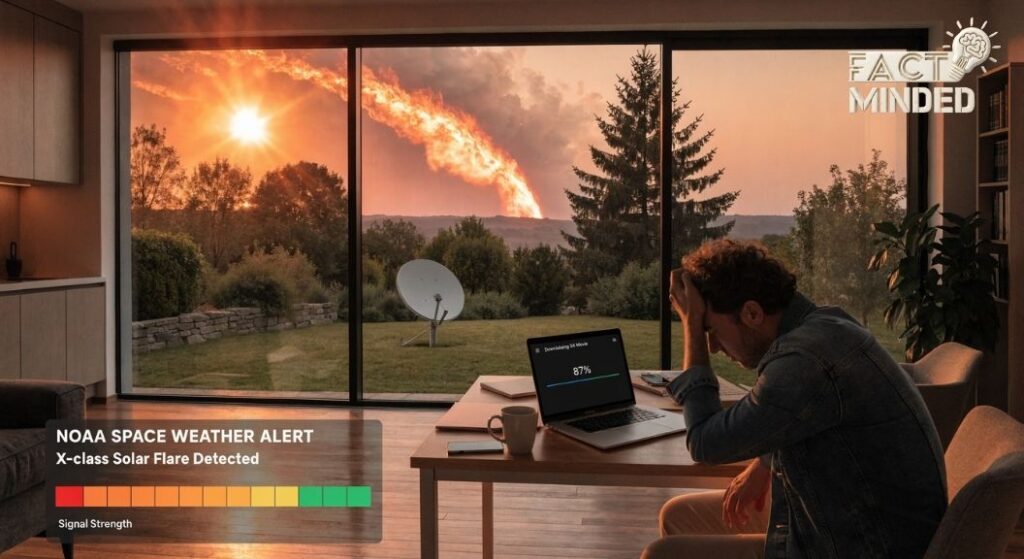
Don’t be a hero. When NOAA says X1 or higher, I stop. Period.
Last September, an X9.3 flare — the strongest since 2015 — killed HF across the US. I was mid-upload. Lost it. Now I wait two hours. That’s it.
EU aviation actually grounds polar flights during these. If they stop planes, you can pause Netflix.
Start Using Space Weather Apps to Lock Better Satellite Signal
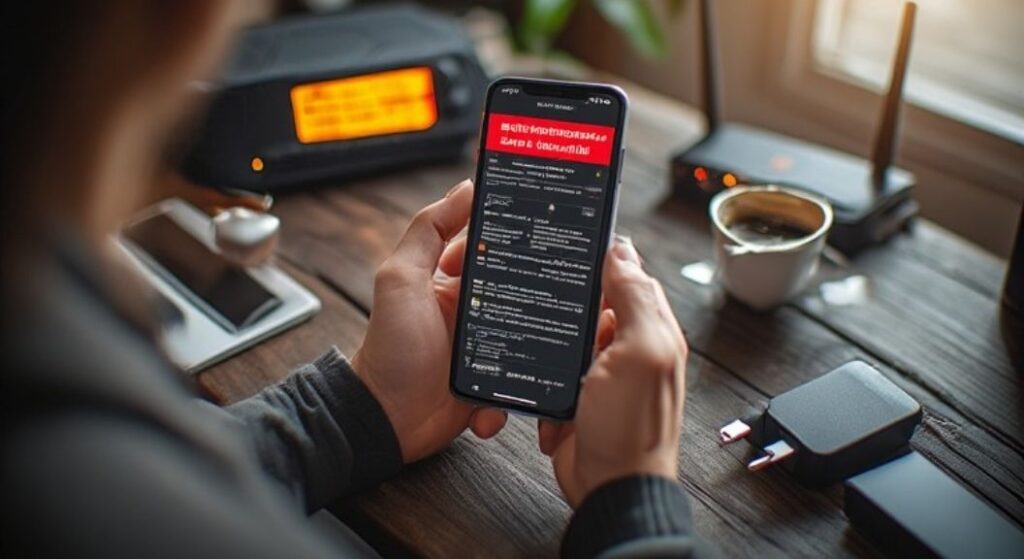
I used to check websites. Dumb. Now my phone buzzes.
Set it for M5 and X1. When it vibrates, I hit pause on Dropbox. Apps show solar cycle trends too, so you know when we’re in a risky month. I also watch the ionosphere map — green means go.
Unlock Better Satellite Signal by Avoiding Peak Sun Hours
11 AM to 3 PM local? That’s rush hour for the sun. I never schedule big transfers then.
Same for sun outages — twice a year, your dish points right at the sun. My provider in Alaska actually emails me: “Feb 24-Mar 5, expect 8-minute drops.” I just work around it.
Master Solar Cycle Timing for Consistent Signal
We’re in Solar Cycle 25 peak right now — that’s why it’s so bad in 2024-2026. NASA and ESA publish the forecast for free.
I plan big projects for the quiet years. Sounds nerdy, but a PubMed review linked geomagnetic storms to real navigation errors. Why risk it?
Check weekly, not just when stuff breaks. You’ll keep a better satellite signal all year.
Why Do Solar Flares Break Your Satellite Signal?
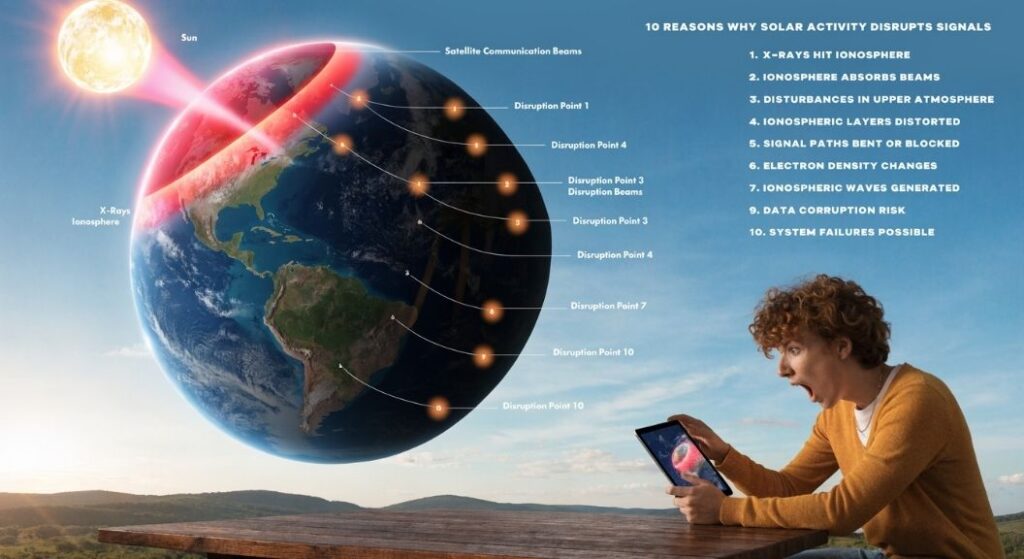
Physics: Flare emits X-rays, our high atmosphere absorbs X-rays, and our high atmosphere becomes a sponge for radio waves.
Your signal is absorbed or bent. There. you have an HF radio blackout. This is GNSS signal degradation. You can see the dip – Stanford follows this live with VLF monitors.
According to data from the EU, it reaches its highest point in 8 minutes. You have 8 minutes to stop. I do. And one day, my internet connection is working, while my neighbour is complaining about it on Reddit.
Just like the myths around phone addiction, space weather forecasting requires facts, not speculation — and that’s what we created at Fact Minded.

FAQs:
1. Do solar flares affect my internet and satellite TV?
Yes. Solar flares ionize the atmosphere and cause HF radio blackouts, which can drop Starlink, GPS, and satellite TV for minutes to hours.
2. How do I know if a solar flare is disrupting my signal right now?
Check NOAA SWPC or ESA Space Weather — if you see an M5 or X-class alert, expect drops. Your signal usually degrades within 8 minutes of the flare.
3. What is the best time to download large files to avoid solar interference?
Download in early morning (6-9 AM) or late night (10 PM-1 AM) local time, and avoid 11 AM-3 PM when flares peak.
4. How long do solar flare disruptions last?
Most radio blackouts last 20-60 minutes; strong X-class flares plus CMEs can affect satellites for 1-3 days.
5. Can I protect my home internet from solar storms?
You can’t stop the flare, but you can pause downloads, use a cellular backup, and schedule uploads outside peak flare windows for a better satellite signal.